https://devourtours.com/blog/seville-oranges/?cnt=ES


In Spain, meals are more than just food but are a sacred time to talk with family and friends. In my experience living with a host family, Spaniards tend to eat most meals with their family. In my host family, we all eat lunch and dinner together at the same time each day, and it is an important part of the day when you all are together and catch up on anything and everything. Another aspect of the meals I noticed is that the fact that the food is finished does not end the conversation, but rather the latter. Often my favorite conversations with my host mom would happen after we finished eating and all the plates were still left on the table so we had nothing to focus on other than the conversation. The other night, we talked on and on about supernatural occurrences in Sevilla, and my host mom shared with me many stories of ghost sightings in the hospital where she used to work. In Spain, this is called sobremesa. It is a sacred time in Spain when all the food is done and the plates are still dirty on the table but the conversation is still thriving because Spanish people place a high value on relationships. Beyond the household, you can see this concept in restaurants as well. It is common for people to stay at the restaurants talking with friends and family, even after the food is done and the waiters don’t pressure you to leave. Instead of immediately bringing you the check once you finish your food, the waiters let you take as much time as you would like and you need to ask for the check when you are ready to leave. This custom is very different in the United States. In the US, although people enjoy their conversations while they are eating, the end of the food generally signifies the end of the conversation as well. At restaurants, once the food is done, the waiters quickly clear off the plates and bring the check and you are pressured to leave as the US restaurants place a higher value on table turnover. Personally, I have really enjoyed experiencing the Spanish meals and sobremesa. I love the high emphasis on relationship building in Spain, it is a very beautiful life to live.
https://www.treehugger.com/sobremesa-an-untranslatable-spanish-delight-4868600

Living in Residencia Celestino Mutis in Pablo de Olavide for the past two months has been a fantastic opportunity. The staff members and residents of the residence here in Seville tend to be friendly and always greet one another making you always feel welcomed no matter what, being “a valuable cultural and human diversity that for centuries has made Seville what it is: a lively, cheerful, hospitable city” as it was mentioned in the article Seville by Eurocities. Compared to the United States, where everyone is doing their own thing and just focusing on their studies, it has been extremely different. We frequently engage in a variety of enjoyable activities during this particular residence that bring us together having a cultural diversity with individuals from all around the world where everyone respects each other. When I initially arrived in Seville, I was anxious and insufficiently prepared for living abroad, which made it difficult for me to make friends and use my communication skills. This residence includes everything I need, including a playroom where residents can socialize and watch TV, as well as a study space that has been useful to me in helping me plan my ideas and study for my exams. The fact that each room has a kitchen so you can prepare your own food amazed me as in the United States, we didn't have the advantage and had to spend a lot of money on a meal plan. Additionally, each resident can use the laundry facility for a low cost without worrying about paying a lot of money for their laundry. I will never forget the amazing experience that made my stay abroad even better. Since they provide residencies in many locations, I will recommend it to anyone wishing to study abroad at Pablo de Olavide or any other university in Spain.
https://eurocities.eu/cities/seville/

I have loved my time in Seville for many reasons, but primarily because of the loving atmosphere. Every day, as I walk through my neighborhood, Los Remedios, on Asunción Street, I see families, children playing, people laughing, and most importantly to me...dogs! I have three dogs back home in the United States and adore animals. I was surprised to see so many dogs able to sit at restaurants with their owners, in the streets of one of the largest cities of Spain, and inside some stores and restaurants as well. In the United States, it is often prohibited for dogs to enter restaurants or stores, especially when they are indoors. I find the restaurant experience far more fulfilling when four-legged creatures are also allowed inside! I noticed that most of the dogs here are either off-leash or on a regular leash and have not seen any electric shock collars, spikes, or harnesses. In the United States, I regularly see dogs with shock collars or spikes and harnesses. Many dogs in the United States bark a lot and the dogs here have been very tame, which could explain this difference. I also noticed that there were no stores selling animals. In the United States, many stores sell animals like PetSmart. After some research, it came to my attention that it is illegal to put a shock collar or spikes on your dog and it is also illegal to sell animals in stores like PetSmart. The only way to get a dog here would be to get a dog from a breeder. Spain seems to have more regulatory laws than the United States when it comes to dogs, and I like that Spain is actively protecting more animals. Stray dogs and animal mistreatment is a problem in the United States and the implementation of similar laws may help combat that problem. It has been fascinating to observe the many cultural differences between Seville and the United States, and I am excited to continue learning and adapting to the culture here (through the process of acculturation and deculturation)! My time in Seville has already been truly special, largely due to the warm and loving atmosphere that permeates the city which is exemplified by the presence of dogs in everyday life.
External Source Link: https://www.euronews.com/2023/09/29/spains-new-animal-welfare-law-explained-what-you-can-and-cant-do


My favorite playgrounds in Seville for kids to spend an afternoon. I share restaurant recommendations near each playground. www.citynibbler.com |
Social life in Spain From my experience here in Spain, I increasingly have noticed how different the social scene is and how Spaniards interact with others. I have made a lot of comparisons to the US and the cultural and social norms of where I live back at home, and it has been interesting to notice and analyze the differences between the different cultures. Here in Spain, people go out on weekdays and spend time with their friends drinking at tapas bars or restaurants, and it is seen as abnormal to go to another person’s house or apartment to hang out or spend the night. In the US, going out on weekdays really isn’t that common, except maybe if it's for a casual dinner, and socializing is spent a lot more in the home, where I invite my friends over a lot and we have sleepovers, make dinner, etc, and it typically is not accompanied by a drink, and typically occurs more on the weekends. I have also noticed that it is respectable to kiss people on the cheek two times when greeting someone, even strangers that they are meeting for the first time; if this was done in the US, people would be very caught off guard and it would be seen as something very strange. This topic of socializing relates to the topic we discussed in class about how we can define “normal” and what is considered to be normal and abnormal. It really all depends on the culture and environment you grew up in, because for Spaniards, these actions and social habits are seen as normal, and they would probably view our social habits in the US as abnormal, and vice versa for people in the United States. We have to recognize that our views and what we constitute as abnormal and normal comes from our own personal experience, and this doesn’t make social actions or practices universally right or wrong. Rather, we need to accept that what might be abnormal for some, may be normal for others, and this will allow us to become better global citizens and engage appropriately with others.
Article link:
https://culturalatlas.sbs.com.au/spanish-culture/spanish-culture-etiquette
I was lucky enough to live in an apartment building with many other students in the building. As part of the amenities there is a pool, a gym, an elevator, among other things. When I got to Spain I was really surprised at how people interact in the building, more specifically at the gym. In the U.S people mostly ignore each other at the gym. If you need a spotter, you ask somebody you know or you don’t ask. I see the same people at the gym every day in the U.S and to be honest we’ve never said hi to each other. In the building it's very different, I’ve been asked plenty of times for a spot. People I only saw one day, say hi to me the next time they see me. They also don’t shy away for asking to take turns on the machine or asking if you are done. The elevator experience is also really different. I get in and people say good night, hi, or any other kind of cordial meeting. At my school, people just get in and start using their phone. So it’s a really friendly and neighborly type of living. I really enjoyed living at my building this past semester. People were really kind and open to talk. There was also a lot activities at the building to get to know one another.
There wereIMG_3203 1.PNG people at the gym so I could not take a photo of it but that is the view.


Outside References:


As I came to Spain, I was coming off of a pretty busy summer in which I was going to work everyday, interacting with family and friends and traveling a ton. I would often eat breakfast on the way to work, and just felt a constant sense of being “on the go”. As soon as I arrived in Spain, everything felt slow. From the pace of people walking on the street, to the times that places opened for breakfast, even to the lengthy meal times. I had grown quite accustomed to the immediate gratification of getting what I wanted when I wanted it. Everything here moves slower, though. At first, I was confused and perhaps thrown off by this. Why couldn’t things just be always accessible? Did this store really have to be closed on Sunday? Sure, a nice sit down meal sounds good every now and then but did every single lunch have to stop the day? As we talked about in class, perhaps the more individualistic mindset as an American can foster this sort of on the go stress that can be slowed down when faced with a shared meal with friends. My frustration soon turned into a deep appreciation for the slower pace of life. I did not understand just how rushed my mindset was when I had come into the semester, but gradually the Spanish culture wore on me and helped me to slow down, take a step back, and appreciate whatever was in front of me. Sure, there were still times when I wanted to get on with my day, or had to fly past some slower walkers on the street. But, overall, my time in Spain has really helped me to appreciate the little things in life and the value of taking it easy as I move through the things that I have before me each day. As shown in this article,https://www.alifeinprogress.ca/a-slower-pace/, sometimes asking “Do I need to be this stressed or am I on autopilot?” Is a good question.


One huge cultural difference I have experienced since being in Spain is that of the restaurant industry. My first night in Spain, my friends and I decided to go out for some drinks and food. The entire time we were there, the waiter did not smile once, and was very slow to bring us our food. I remember saying to my friend that I thought he hated us and was probably annoyed by us. However, at the end of the night he gave all of us free shots! I left being very confused, as I had assumed the whole time he was annoyed with us. I then began to realize that this is pretty typical in Spain. Servers do not work for tips, which is a factor in why they do not feel the need to be fake nice to people. In the US, most servers have to be extremely nice to customers, even if they do not want to, in order to get tips. Many of my friends only get 2 dollars an hour, and the rest of the money they get is through tips. In Spain, they receive a salary, so they are not working for tips. Also, in the US speed is very much appreciated when it comes to food. In Spain, it is normal to stay and eat with friends for several hours, therefore it could appear they are intruding on the customers time if they were checking in a lot.
In class, we learned about different mindsets in different cultures. The US has an individualistic mindset, and are always on the go and working. This represents the competitive nature that is seen in the US. Therefore, the best waiters are rewarded through tips. In Spain however, they have a collectivistic mindset. Waiters are not working for tips, and it is not seen as competitive. This leads to the very different ways in which servers act in Spain compared to the US.
https://www.glassdoor.com/Salaries/spain-server-salary-SRCH_IL.0,5_IN219_KO6,12.htm
https://www.tripsavvy.com/should-you-tip-in-spain-1644349
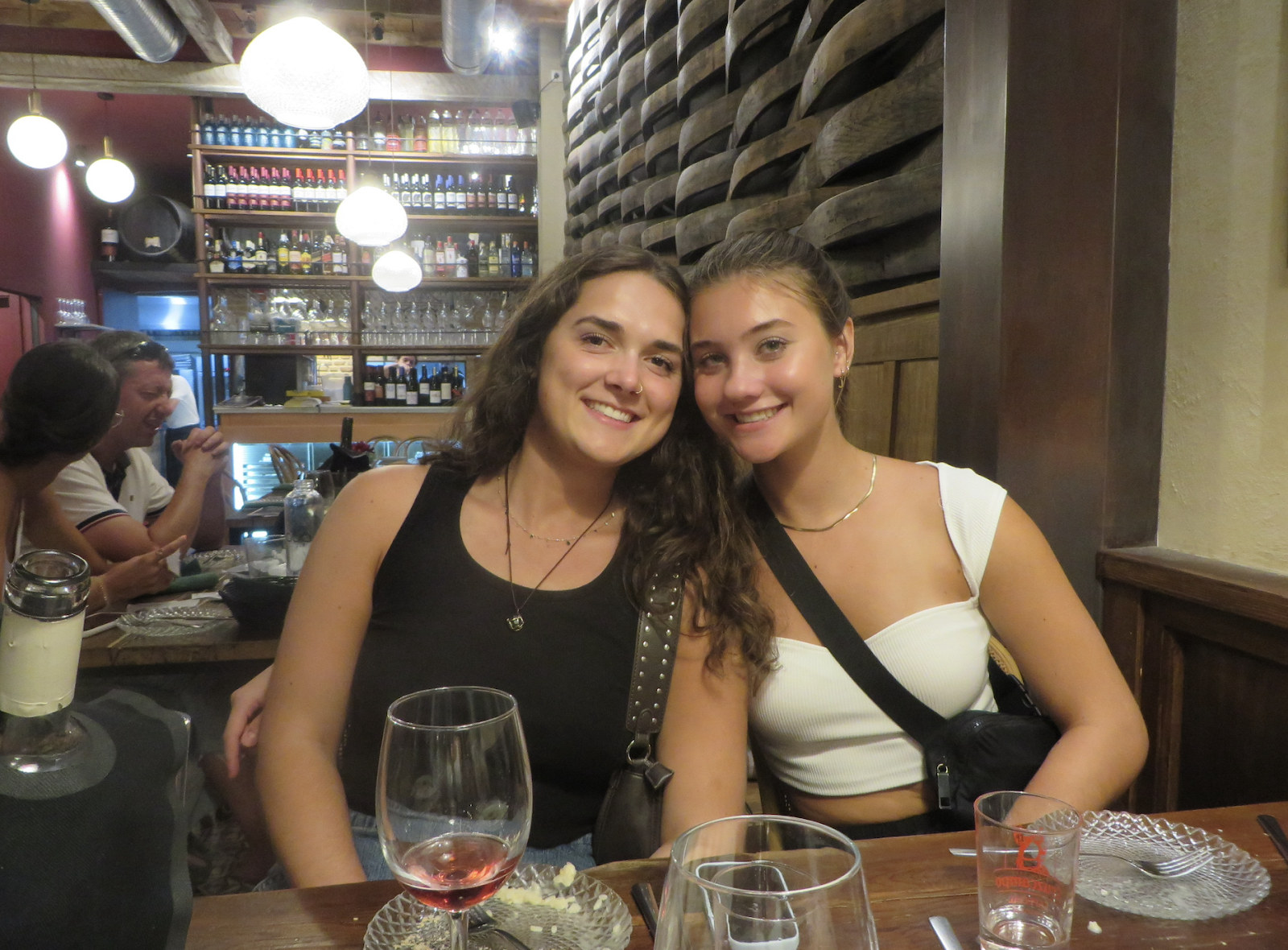
Here is my friend and I at the restaurant!
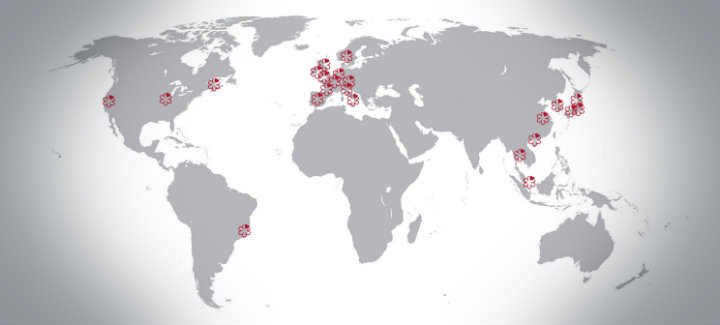
“Michelin Star Consumers”
There are a limited number of restaurants awarded this label in the world and are also more expensive to purchase a meal at. Some customers fly to an area specifically to have a Michelin dining experience, making this an exclusive way to buy and consume food.
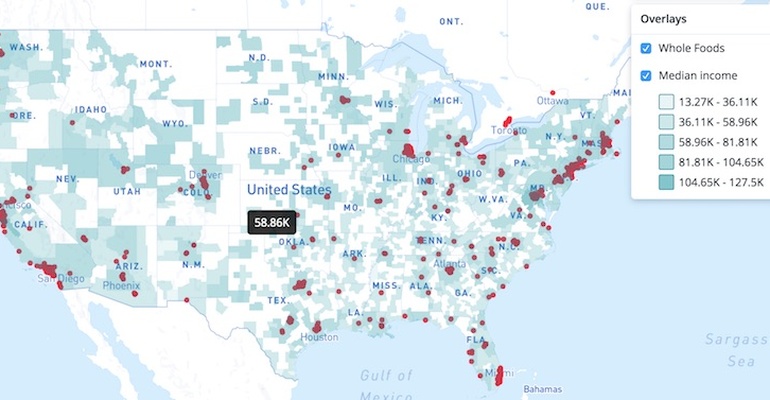
“Whole Foods Consumers”
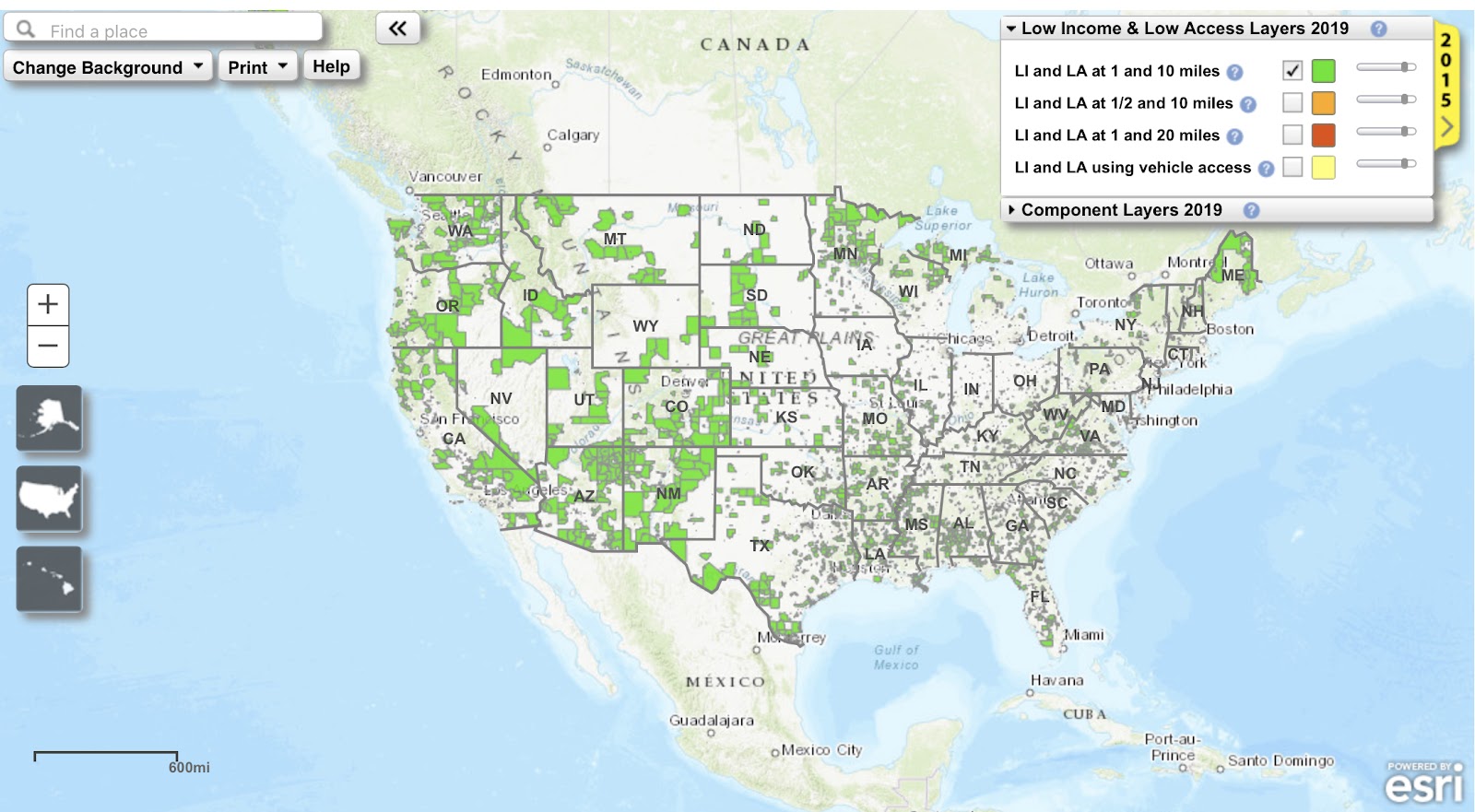
Next we have those with the income and accessibility to shop at grocery stores with healthy food choices but at a cost. Whole Foods (the grocery store) in the US has aisles of powdered mushrooms and superfoods along with organically grown produce, meat, etc. However, as one can see in the image above, Whole Foods is not accessible to everyone in the U.S. due to both its location and price, imposing limitations on possible customers. In Spain, it could be compared to a Sanchez Romero supermercado although the comparison is not perfect. In other countries, such as Nigeria, luxury supermarkets are not well recognized.
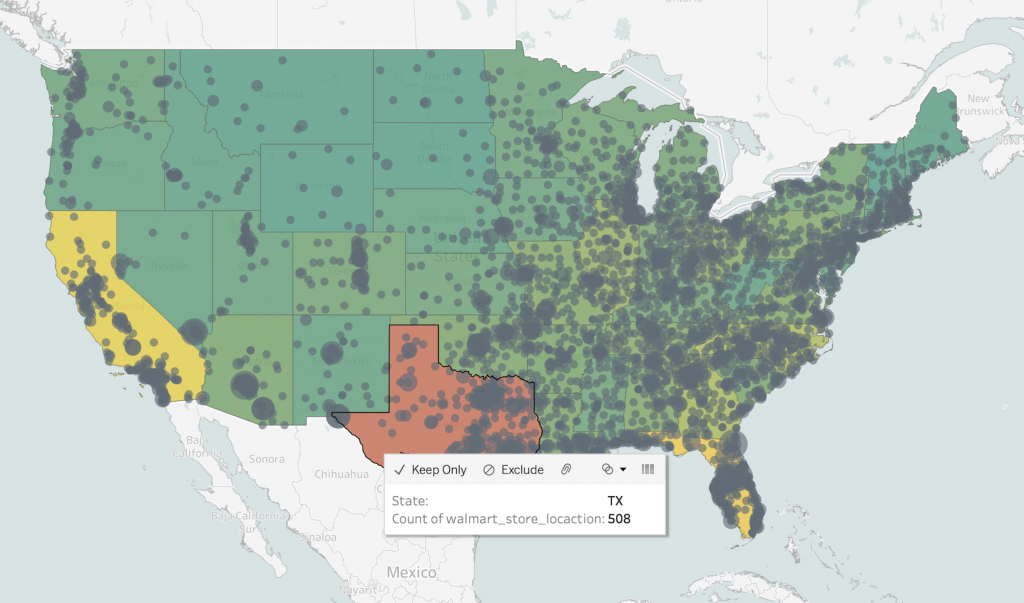
“Walmart Consumers”
Larger supermarkets that are more populous and have cheaper prices are more accessible for a larger number of food consumers. The food may not be as high in quality as that sold in a luxury supermarket, but it is more affordable. In Spain, Walmart’s food section could be compared to a Día supermercado. In Nigeria, their chain supermarket system is not very developed, with their more infamous chain Shoprite only available in 13 cities; with this being said, it is crucial to note that much of the country (33%) is cultivated land, with small farms producing at least 80% of the food. Therefore, local food markets and stores in Nigeria could be compared as an equivalent to Walmart produce, and those who buy food in this manner could be placed into this category. One critical difference between the population of consumers who eat food from a Walmart and from local produce is the quality of the food. Originally, I created this category with the mindset that these consumers do not have easy access to “healthier” foods due to various factors, with income standing as a main inhibitor. As I place the Nigerian citizens who mainly shop at local markets here into the “Walmart Consumer” group, it is crucial to note that their limited ability to shop at a store like Whole Foods does not necessarily limit their ability to eat a healthy diet. The danger here would concern local production— droughts, floods, any environmental occurrences that can negatively impact availability of local food production.
“Food Desert Consumers”
U.S. food deserts are generally defined as areas where healthy food is not at all available to the community. Instead, driving around streets in food deserts you will find liquor stores and fast food options. As previously stated, Nigeria has a lot of fresh food being actively produced, so a simple lack of grocery stores would not be a proper definition for this category in relation to Nigeria. In this text, then, a food desert consumer is an individual who does not have “easy” access to “healthy” food wherever it is they live. “Easy” in the sense that it would take a lot of time and effort to reach a place that sells meats and produce, and “healthy” in the sense that the food is fresher and will have a more beneficial impact on one’s physical health.
I am over the word limit, so instead of going into the connection of food to physical health and life expectancy, I will stop here. Resources I used and extra notes for class discussion are below:
Connection to health/ extra notes:
Just as the washing machine gives people the chance to fulfill other areas of their life such as educating themselves, being in a place where you are not concerned about getting healthy food allows you to:
Avoid debilitating health conditions such as Type II diabetes, obesity, Kwashiorkor, chronic heart disease, etc
Function better cognitively
Have a boosted mood and motivation to develop other areas of your life as well (EX: you feel stronger mentally, so you decide to start a business or enroll in college)
Income and accessibility directly contribute to where people can shop- at wholefoods, fly to a michelin star, eat at McDonalds because that’s the closest thing to them, etc
New York City’s lowest income neighborhoods. Similarly, disparities exist in diabetes prevalence rates; 5% of adults living in the Upper East Side neighborhood report a diabetes diagnosis, compared with 10–15% of adults living in East and Central Harlem and North and Central Brooklyn
Obviously, this information comes from stats in the US, but there are so many more scientific articles discussing the direct impact of food on health
Therefore, if a community is reliant on local fresh food like Nigeria, they will most likely not show the same results even though I place them in the food desert. But what this does mean is that if something were to happen to local produce (ex: lack of rain), then the people could be in trouble and suffer other health conditions
The study found that people in the eastern Louisville lived as much as 12.6 years longer than some of their neighbors in northwestern areas. 12.6 YEARS LONGER. Like let that sink in.
https://www.ers.usda.gov/amber-waves/2011/december/data-feature-mapping-food-deserts-in-the-u-s/
https://studentwork.prattsi.org/blog/2022/07/18/walmart-locations-in-the-us/
https://www.businessofbusiness.com/articles/breaking-whole-foods-likes-rich-people/
https://guide.michelin.com/us/en/restaurants
https://nwtnlfn.org/2021/02/26/the-local-food-system-in-nigeria/
Measuring food deserts in New York City’s low-income neighborhoods. Cynthia Gordon, Marnie Purciel-Hill, Nirupa R. Ghai, Leslie Kaufman, Regina Graham, Gretchen Van Wye. 27 May 2010.